Today there are five houses, four on Malta and one on Gozo. Each cooks for its place: fish on the quay, rabbit in the country, ftira from the wood oven on Gozo. What holds them together is the name: the honey of the islands and the honey-coloured stone they are built of.
2012
Honey and stone
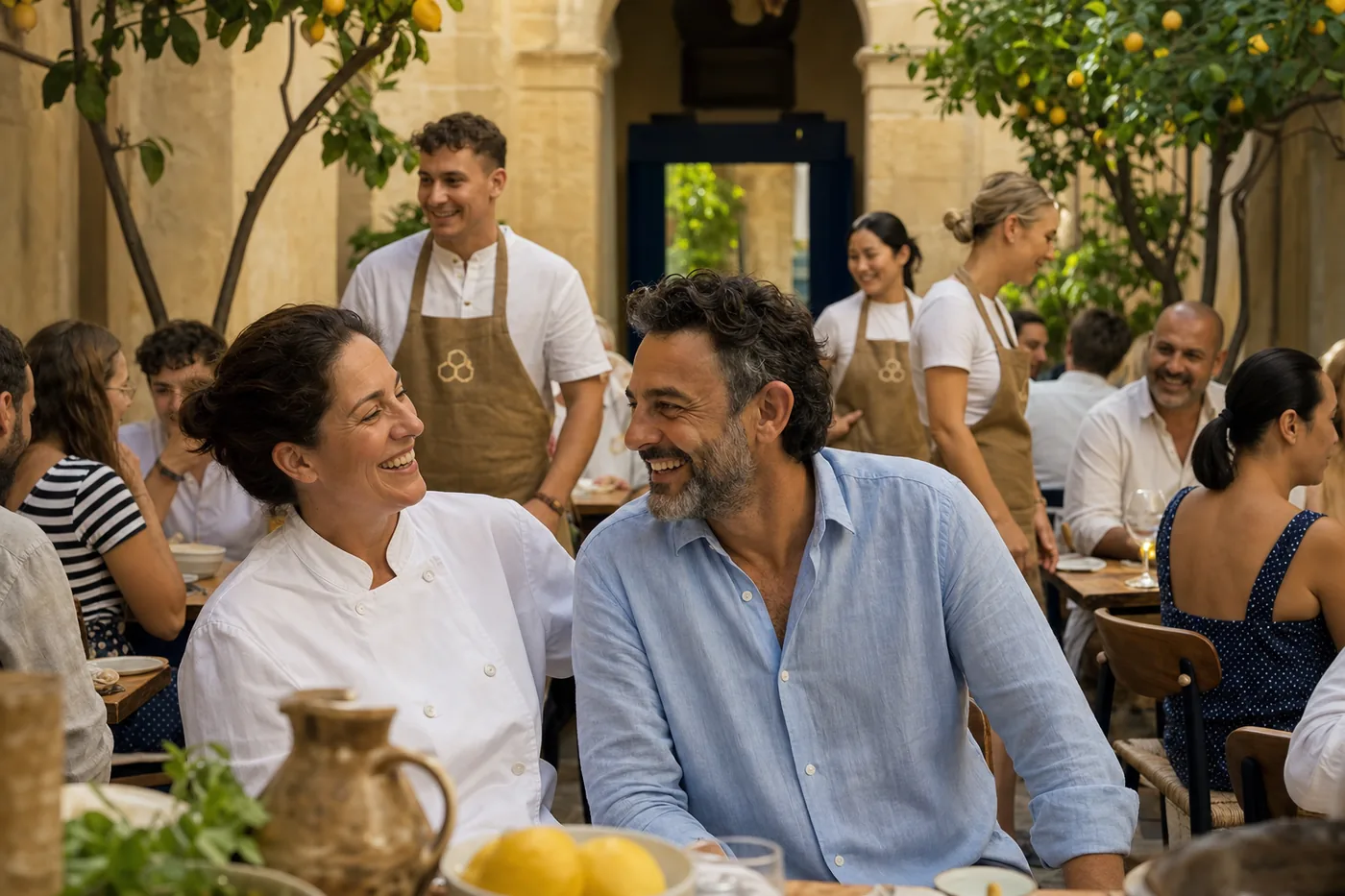
A palazzo at the end of Merchants Street, vaults of Globigerina limestone, forty seats and a courtyard.
The Greeks called the island Melitē, by the common reading the place of honey; another reading takes the name back to the Phoenician Maleth, a haven. And Valletta, Mdina and almost every village are built of the soft Globigerina limestone that turns the colour of honey in the evening sun. Rita and Matthew wanted a name a guest from anywhere could say, and that told both stories at once.
Rita had cooked in Sicily and in London and came home wanting Maltese food on a white tablecloth. Matthew knew which boat had been out that morning. The first menu had rabbit, aljotta, ġbejniet from Rita's village and, every day, a fish he had chosen on the quay at six.
“We put the honey on the table before we had a sign over the door.”
2016 – 2021
One house after another
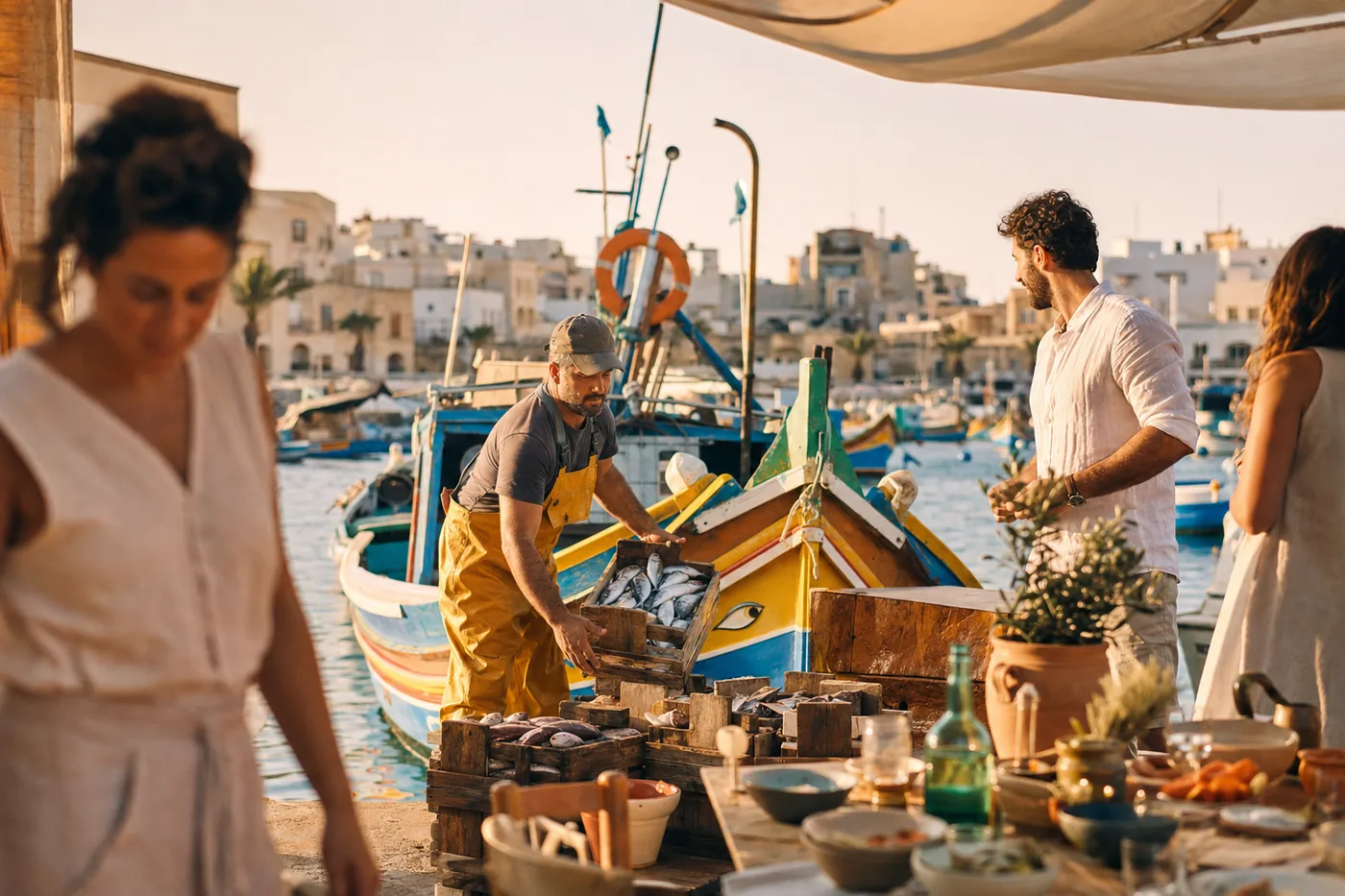
Sliema, Marsaxlokk, Rabat: each house only when there was a place that asked for its own kitchen.
Sliema came first, on the seafront, open from breakfast to the last glass, with the pastizzeria at the door that is still our biggest. Then Marsaxlokk, Matthew's harbour, where the fish counter decides the menu and a guest chooses a whole fish by weight.
Rabat followed in 2021, by the gates of Mdina, where a Sunday lunch lasts the afternoon and the fenkata is cooked for a whole table. Every house cooks for its place, not from a central plan.
today
Across the channel
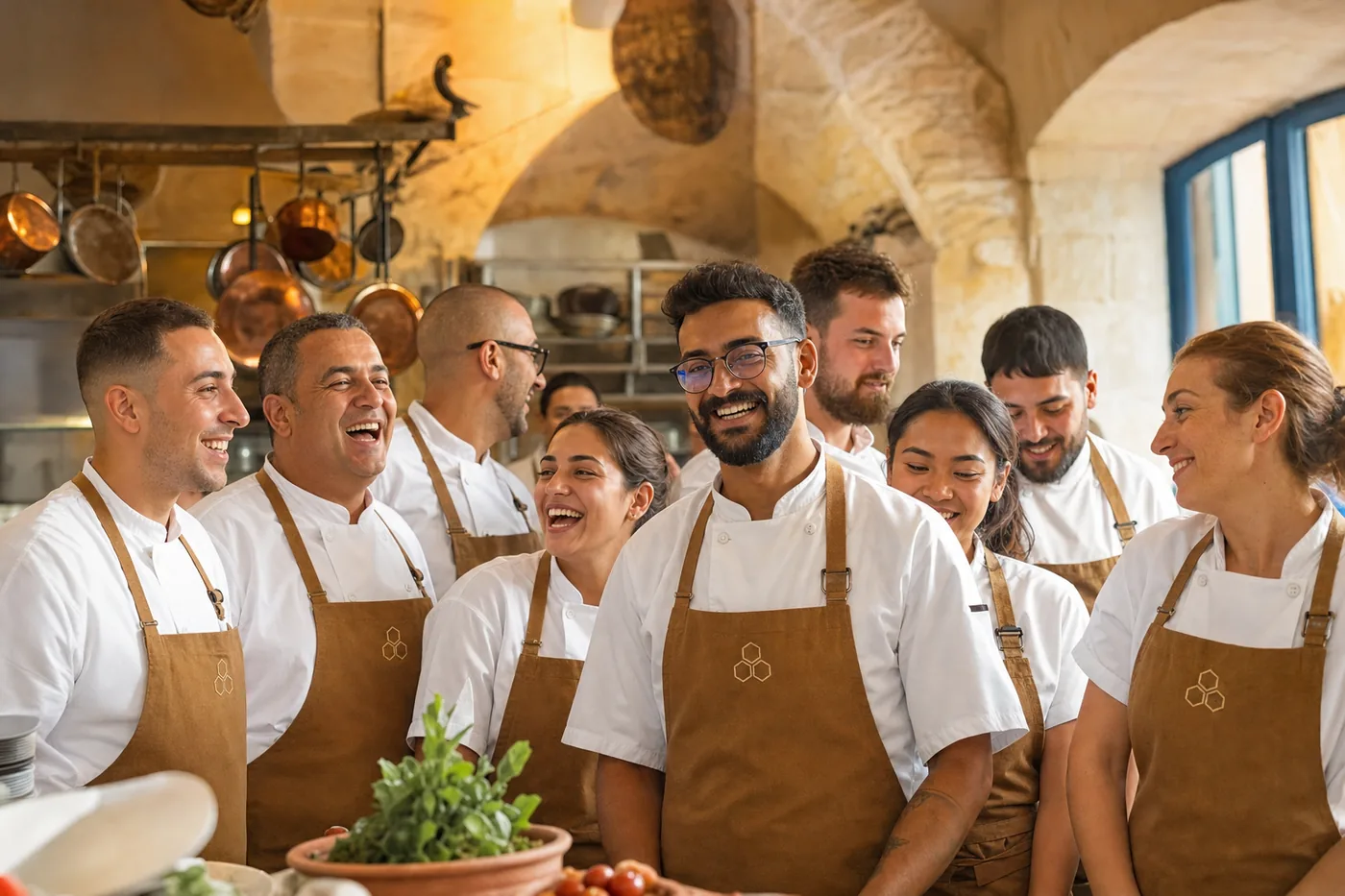
Victoria on Gozo joined in 2024. About a hundred people work for Honeystone today, in the kitchens, on the floor, at the bars and at the pastizzerias.
On Gozo the goods come over on the ferry, the wood oven bakes the ftira, and the winter is quiet enough to hear the bells of the Citadel. It is the house Rita always wanted, twenty minutes from the village she grew up in.
What is new: orders go from the table straight to the kitchen, the bill comes to the table, and whoever just wants a pastizz orders at the kiosk. So there is more time for what matters.
“The sea decides what we cook in Marsaxlokk. We only decide how.”
Along the way
- 2012
- The first house in Valletta, in a merchant's palazzo on Merchants Street
- 2014
- The first farm partner: a sheep farm in Gozo making our ġbejniet
- 2016
- Honeystone Sliema, on the seafront, open all day
- 2017
- The business lunch: seated, served and back at the desk in 45 minutes
- 2018
- Honeystone Marsaxlokk, the fish house on the quay
- 2019
- The first torta tal-lampuki on the menu, from 15 August
- 2021
- Honeystone Rabat, by the gates of Mdina
- 2022
- A Pastizzeria & Kafè opens in every house
- 2024
- Honeystone Victoria, the first house on Gozo
- 2025
- The Honeystone Card in the wallet
From the rock and the sea
74 per cent of what we buy for the kitchens is fished, grown or made on Malta and Gozo.
Malta is small, and almost everything we cook comes from within an hour's drive: fish from the boats of Marsaxlokk, cheeselets and vegetables from the farms of Gozo, honey from the garrigue, capers from the rubble walls.
Every house has its own partner, close by, who brings what that kitchen needs. That is why the menu in Marsaxlokk is not the menu in Rabat.
Honeystone Valletta
Partner: Vegetable growers in the valleys of the north · Wardija, Malta · 21 km · since 2012
At the house: Herb terrace on the roof: thyme, oregano, bay, marjoram
Tomatoes, marrows, broad beans and the artichokes for spring; the herbs for the last minute come from our own roof.
Honeystone Sliema
Partner: A family bakery that bakes our ħobż Malti · Qormi, Malta · 9 km · since 2016
At the house: Pots of mint and basil along the terrace
The sourdough loaves and the dough for two thousand pastizzi on a Saturday.
Honeystone Marsaxlokk
Partner: Fishing families who land their catch on the quay · Marsaxlokk harbour · since 2018
At the house: Bay and lemon in the yard behind the kitchen
Grouper, pandora, white seabream, red prawns, octopus from the pots and, from 15 August, the lampuki. What the boats do not bring is not on the counter.
Honeystone Rabat
Partner: A rabbit and vegetable farm on the edge of the countryside · Dingli, Malta · 6 km · since 2021
At the house: Courtyard with a carob tree and a fig
The rabbits for the stuffat and the fenkata, potatoes, onions and the peas for the pastizzi.
Honeystone Victoria
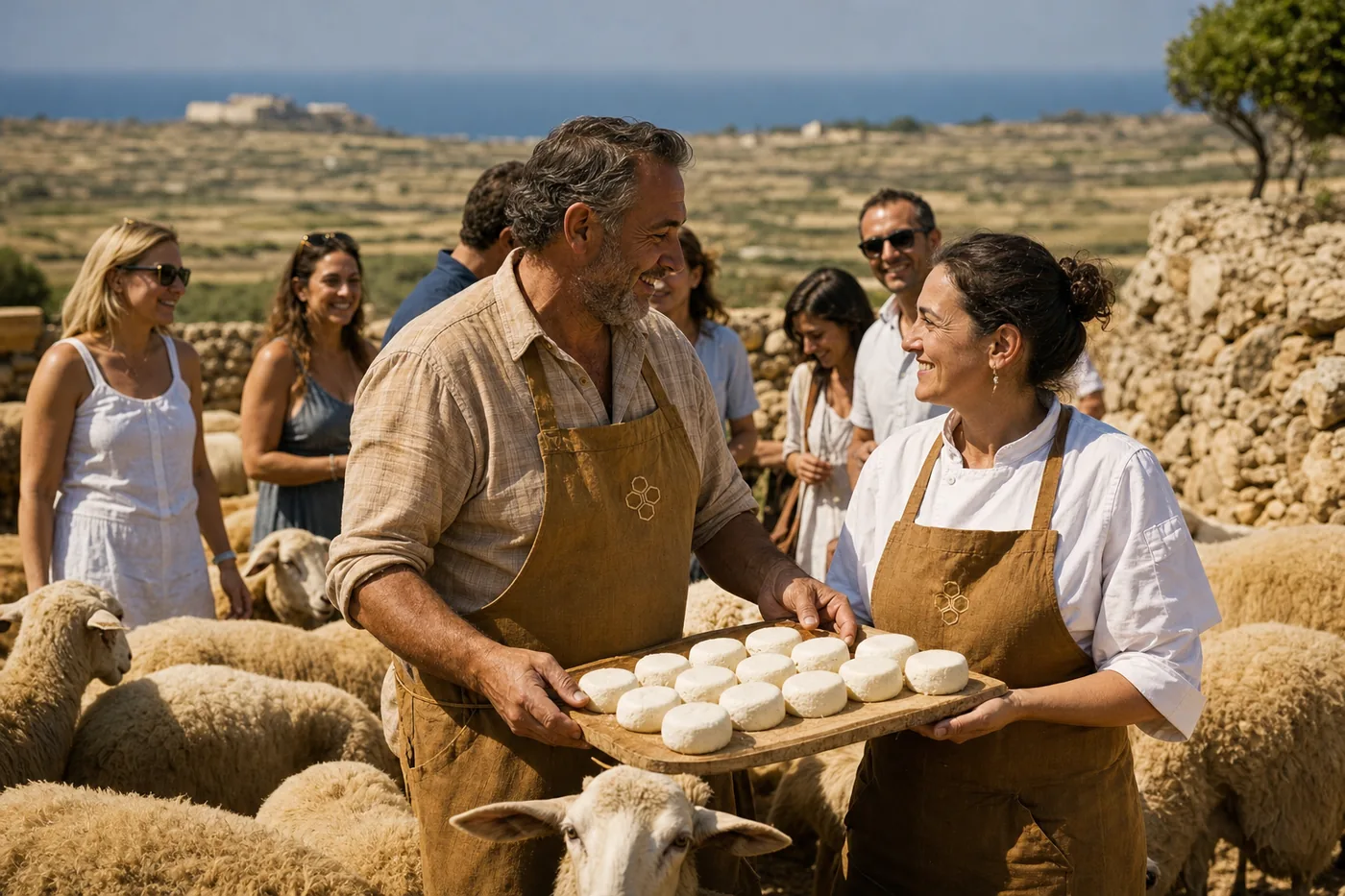
Partner: A sheep farm that makes our ġbejniet · Għarb, Gozo · 5 km · since 2014
At the house: Rosemary and oregano beside the wood oven
Fresh, sun-dried and peppered ġbejniet for all five houses, and the lamb for Victoria and Rabat.
Fish, honey, salt, wine
- Fish · The boats of Marsaxlokk and the south coast
- Line-caught or from the nets of the day; sea bass and gilthead seabream from the fish farms in Maltese waters, and we say so on the menu.
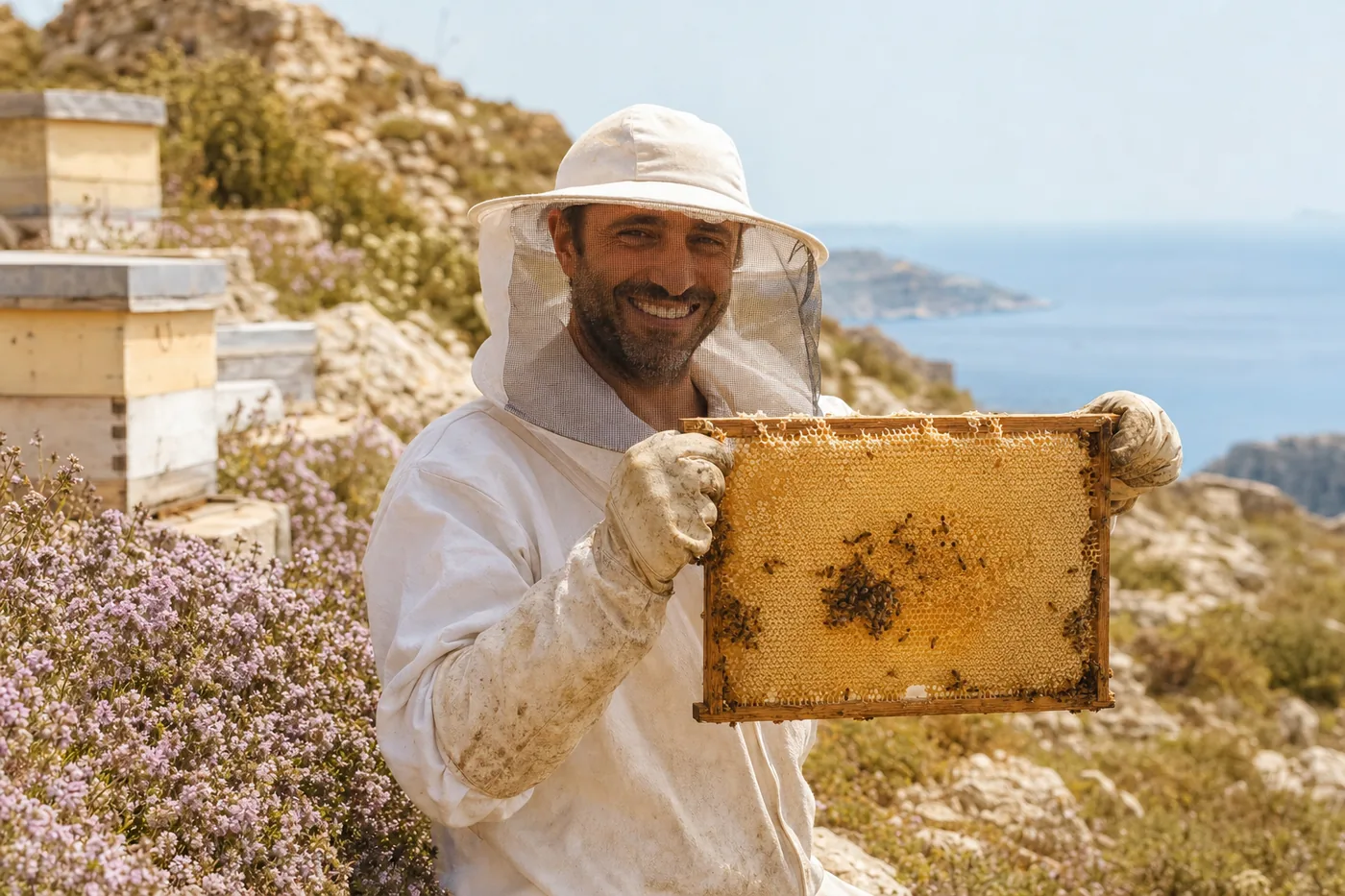
- Honey · A beekeeper in the garrigue of Gozo
- Thyme honey, harvested in early summer when the wild thyme flowers. On the ġbejniet, in the desserts and in the jar.
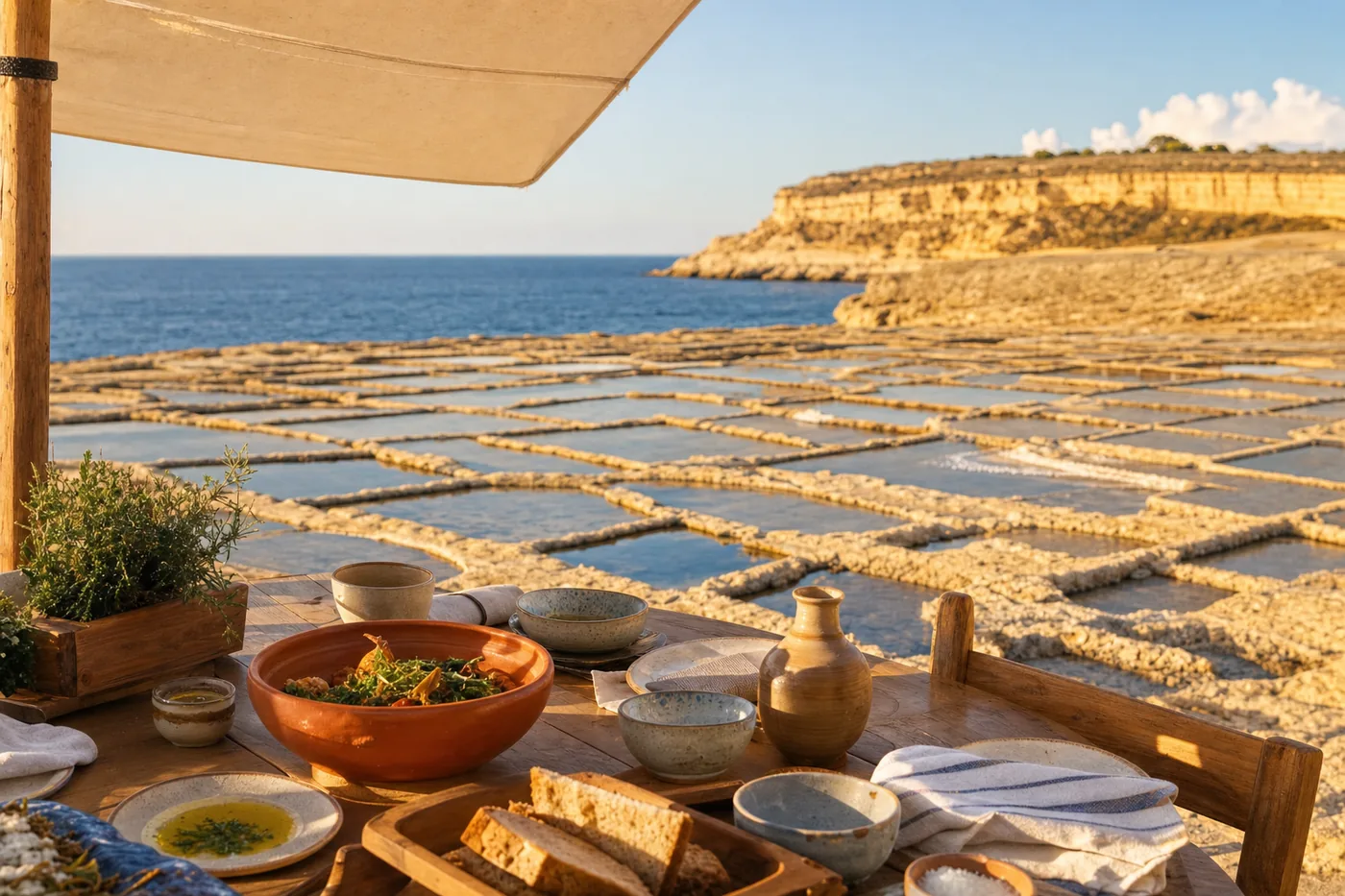
- Salt and capers · The salt pans and the rubble walls of Gozo
- Sea salt from the pans on the north coast, wild capers picked from the walls in May and June.
- Wine · Vineyards on Malta and Gozo
- Only Maltese and Gozitan wines, Għirgħentina and Ġellewża first, also in the pairing.
What is not from the islands
- Beef
- Malta raises little beef. Ours comes from grass-fed herds in Ireland, and the menu says so.
- Flour
- The islands grow almost no wheat. The bakery mills Italian and Maltese grain.
- Coffee
- It does not grow here. We buy from a small roaster who knows the farms.
- Tuna and swordfish
- Mediterranean fish, landed in Malta, caught within the quotas set for them.
We write down what does not come from the islands, because an honest list is worth more than a fine word.